
Formation · Ordovician
Fezouata Formation
Early Ordovician unit, Zagora · Drâa-Tafilalet
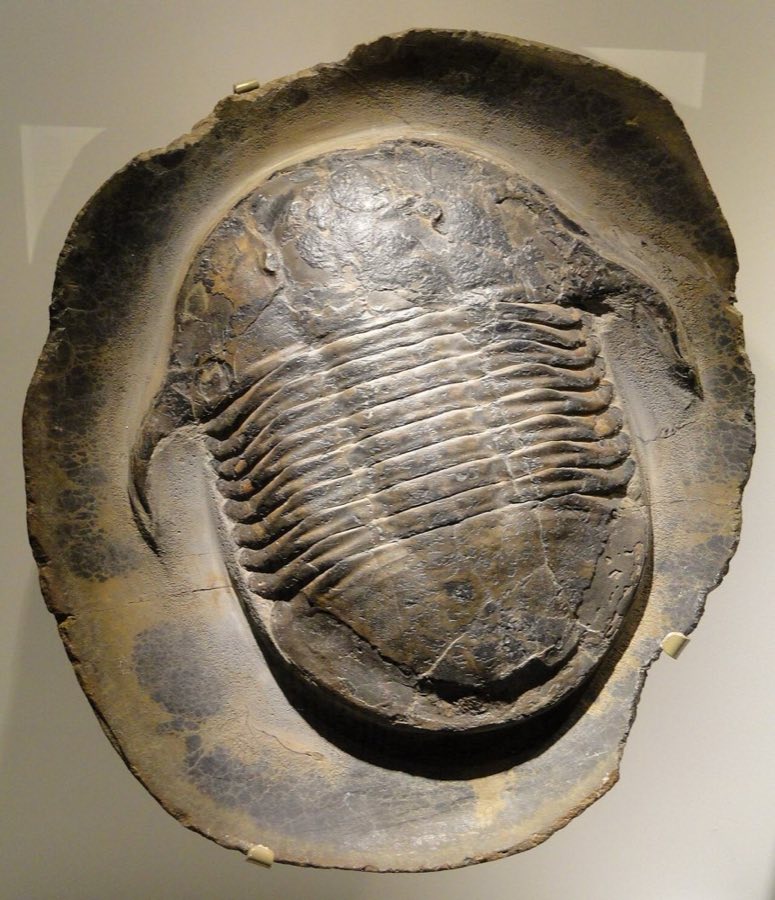
The Fezouata Formation north of Zagora is an Early Ordovician Burgess-type biota that preserves soft-bodied animals in orange-weathering siltstone: marrellomorphs such as Furca, anomalocaridids, early horseshoe crabs and abundant trilobites like Asaphellus and Bavarilla. Trade material is mostly multi-trilobite plates and the occasional Selenopeltis or Ampyx; pieces are often iron-stained red and sometimes enhanced with paint or engraving. Soft-bodied rarities are scientifically significant and should not be bought without documented provenance.
| Country | Morocco |
|---|---|
| Region | Zagora, Drâa-Tafilalet |
| Age | Tremadocian, Early Ordovician |
| Age range | ~485–477 Ma |
| PBDB collections | 51 collections, 383 occurrences· Paleobiology Database |
Collecting and legality
Fezouata is a Konservat-Lagerstätte of high scientific value; Moroccan authorities and researchers monitor the trade in soft-bodied taxa. Common trilobite plates are freely exported, but anomalocaridids, marrellomorphs and other soft-bodied fossils should carry clear paperwork and are best left to institutions.
Lithology and setting
Green-grey micaceous siltstones and mudstones of a cool, storm-influenced shelf at high southern latitude, with iron-oxide preservation of soft tissue.
Commonly recorded taxa (PBDB)
Genera most often recorded from this unit in the Paleobiology Database (first 200 occurrences): Thoralispira (10), Asaphellus (9), Colpocoryphe (9), Macrocystella (7), Ampyx (6), Carcassonnella (6), Redonia (6), Bathycheilus (5), Baltograptus (4), Didymograptus (4), Neseuretus (4), Rhopalocystis (4), Apatokephalus (3), Balantiocystis (3), Bavarilla (3).
Source: Paleobiology Database
Elsewhere
Cite this article
Stratum Study. "Fezouata Formation" (Formation). Stratum Study pack 2026.09, as of 2026-09-19. https://stratum.black/study/formations/fezouata-formation. Accessed 2026-09-20.
@misc{stratum-fezouata-formation,
  title        = {Fezouata Formation},
  author       = {{Stratum Study}},
  howpublished = {\url{https://stratum.black/study/formations/fezouata-formation}},
  year         = {2026},
  note         = {Formation article, Stratum Study pack 2026.09, as of 2026-09-19; sources: stratum, pbdb, wikidata, commons. Accessed 2026-09-20.}
}
Citations carry the pack version and the article's as-of date so they resolve to the same text later. The facts themselves belong to the sources listed below; cite those for the science.