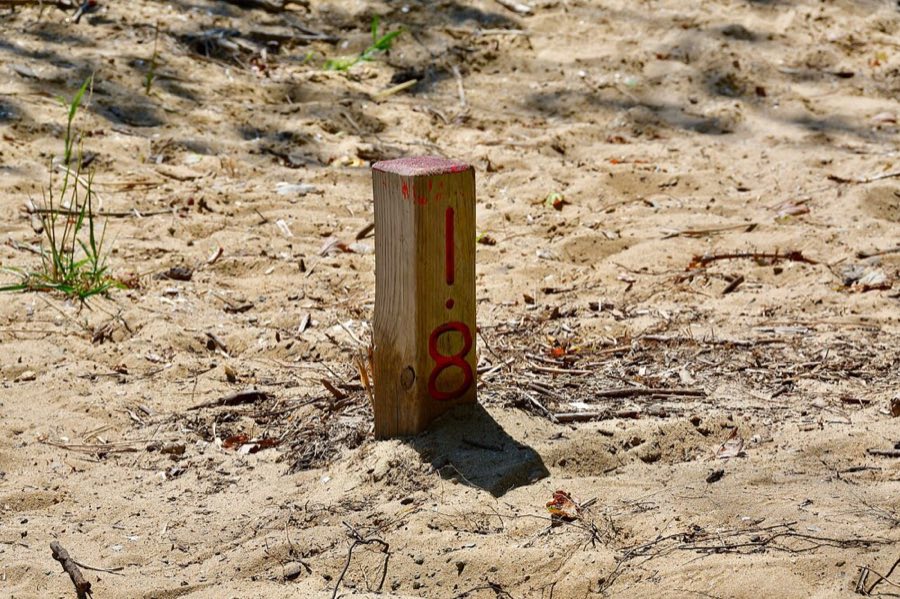

Locality · Beach collecting only; cliffs closed
Calvert Cliffs
Calvert, Maryland, United States
Calvert Cliffs on the western shore of Chesapeake Bay expose the Miocene Calvert, Choptank and St. Marys formations for 24 miles and drop shark teeth, Ecphora and whale bone onto the beaches with every tide. The state park and county beaches allow beach collecting; the cliffs themselves are off limits. It is the classic east-coast family fossil trip and the source of most Maryland megalodon teeth.
| Country | United States |
|---|---|
| State / province | Maryland |
| County | Calvert |
| Land manager / status | Maryland Department of Natural Resources (state park); Calvert County parks; private communities |
| Access | Calvert Cliffs State Park (2-mile trail to beach), Flag Ponds Nature Park, Brownies Beach; many beaches private |
| Formations | Calvert Formation |
| What is found | Otodus megalodon, Carcharodon hastalis, Hemipristis, Notorynchus, Ecphora, Chesapecten, whale bone |
| Coordinates (public site) | 38.39, -76.43 |
Rules
Collecting is allowed only from the beach and shallow water; climbing or digging in the cliffs is prohibited and dangerous (cliff falls have killed people). Finds are yours to keep. Private communities such as Scientists' Cliffs restrict beach access to residents.
Source: https://dnr.maryland.gov/publiclands/pages/southern/calvertcliffs.aspx (checked 2026-09-16).
Collecting rules
Elsewhere
Cite this article
Stratum Study. "Calvert Cliffs" (Locality). Stratum Study pack 2026.09, as of 2026-09-19. https://stratum.black/study/localities/calvert-cliffs. Accessed 2026-09-20.
@misc{stratum-calvert-cliffs,
  title        = {Calvert Cliffs},
  author       = {{Stratum Study}},
  howpublished = {\url{https://stratum.black/study/localities/calvert-cliffs}},
  year         = {2026},
  note         = {Locality article, Stratum Study pack 2026.09, as of 2026-09-19; sources: stratum, commons. Accessed 2026-09-20.}
}
Citations carry the pack version and the article's as-of date so they resolve to the same text later. The facts themselves belong to the sources listed below; cite those for the science.