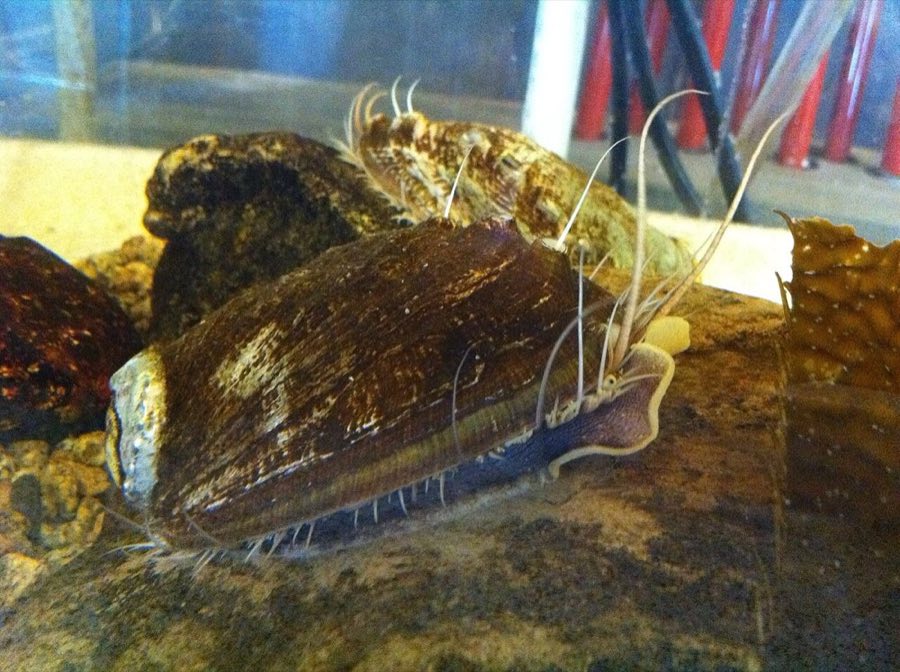

Shell · Genus
Haliotis
Abalone
Abalone (Haliotis) are ear-shaped gastropods with a row of respiratory holes and an iridescent nacreous interior used in inlay and jewellery; red abalone from California, pāua from New Zealand and perlemoen from South Africa are the well-known species. Polished shells are sold by the crate; large, undamaged wild red abalone shells over 25 cm are now scarce. Abalone poaching is a serious crime in South Africa and California.
| Habitat | Rocky shores and kelp forests, cool temperate to tropical |
|---|---|
| Regions | California, New Zealand, South Africa, Japan, Australia, Mediterranean |
| Family | Haliotidae |
| Authority (WoRMS) | Linnaeus, 1758· WoRMS / MolluscaBase |
| Status (WoRMS) | accepted· WoRMS / MolluscaBase |
| Classification (WoRMS) | Animalia › Mollusca › Gastropoda › Lepetellida › Haliotidae· WoRMS / MolluscaBase |
CITES and protection
Abalone are not CITES-listed but are heavily regulated as fisheries: South Africa's Haliotis midae is subject to a CITES-style national permit system since poaching crises, California closed its recreational fishery in 2018, and New Zealand pāua shells require no permit but pāua meat does. Check the source of any large commercial lot.
Care (Byne's disease)
The nacreous interior is stable; the outer shell traps salts and is prone to efflorescence.
Elsewhere
- WoRMS AphiaID: 138050
- Wikidata: Q190093
- WoRMS / MolluscaBase record
- Wikipedia: Haliotis
- CITES Appendices
Cite this article
Stratum Study. "Haliotis" (Shell family). Stratum Study pack 2026.09, as of 2026-09-19. https://stratum.black/study/shells/haliotis. Accessed 2026-09-20.
@misc{stratum-haliotis,
  title        = {Haliotis},
  author       = {{Stratum Study}},
  howpublished = {\url{https://stratum.black/study/shells/haliotis}},
  year         = {2026},
  note         = {Shell family article, Stratum Study pack 2026.09, as of 2026-09-19; sources: stratum, worms, wikidata, commons. Accessed 2026-09-20.}
}
Citations carry the pack version and the article's as-of date so they resolve to the same text later. The facts themselves belong to the sources listed below; cite those for the science.