
Echinoid
Clypeaster
Sea biscuit
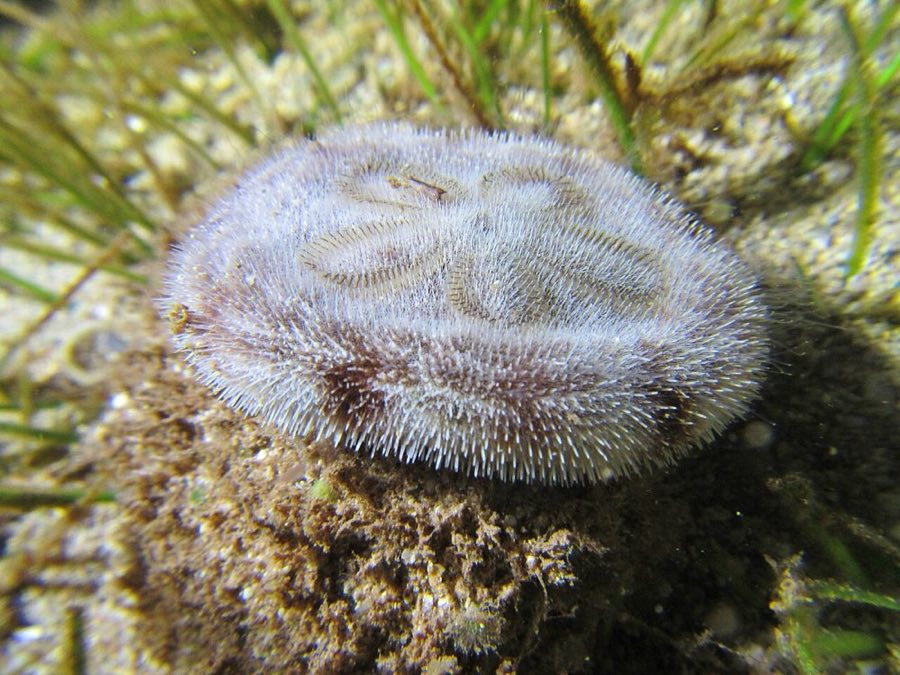
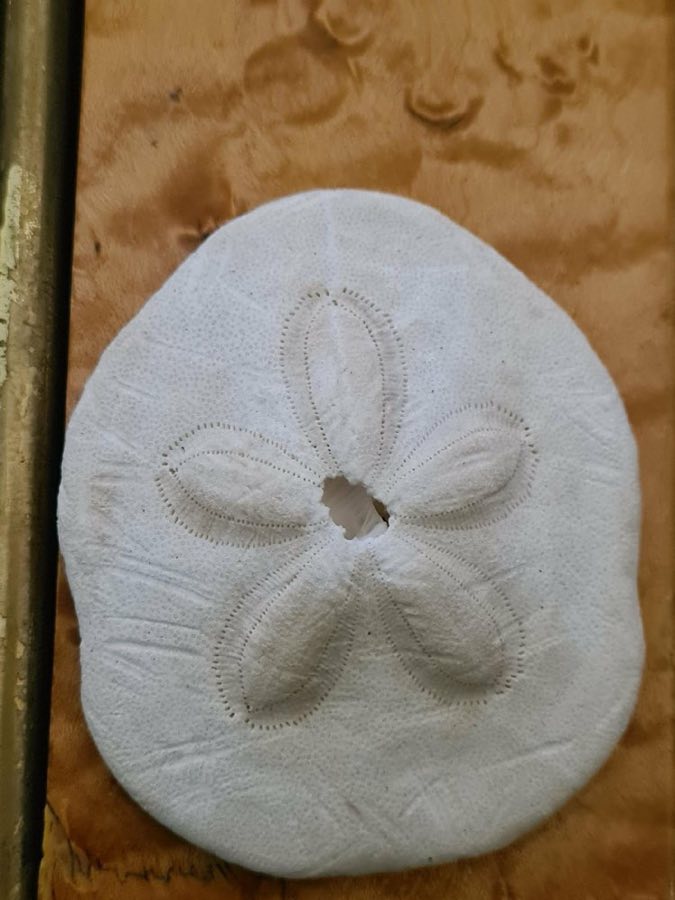
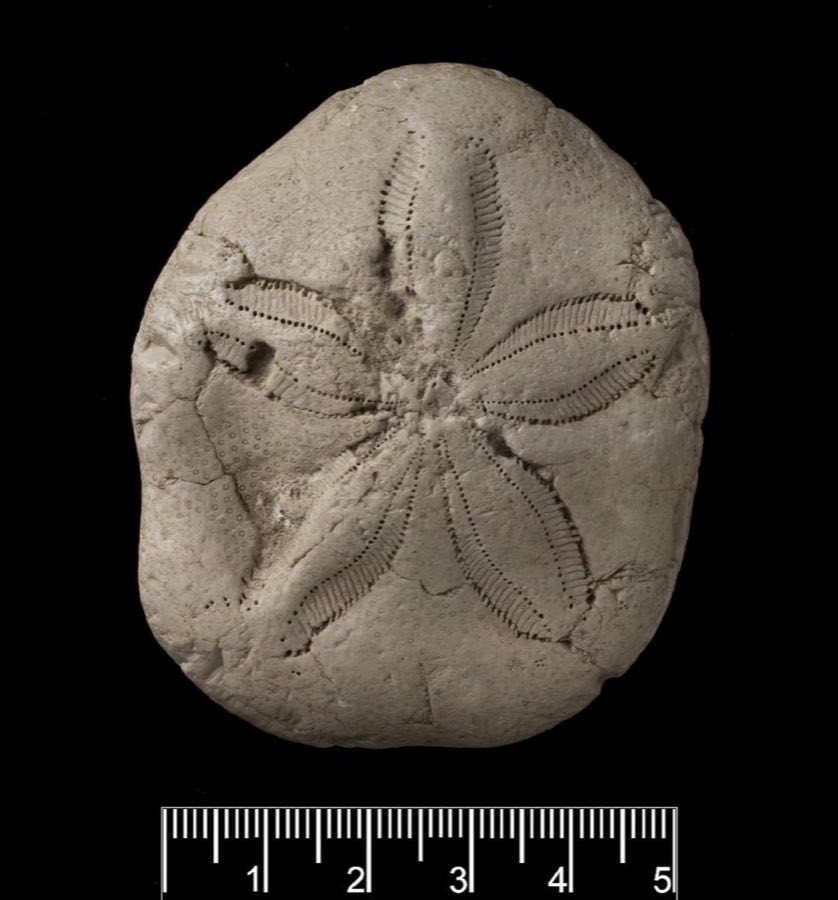
Clypeaster is the large, thick sea biscuit of the Miocene–Pliocene of Florida, the Mediterranean and Morocco, and the largest fossil echinoid collectors commonly own. Moroccan Clypeaster are sold cheaply, often polished or painted; Florida and Spanish specimens are natural. The five petal-shaped ambulacra are raised and unmistakable.
| Phylum | Echinodermata |
|---|---|
| Class | Echinoidea |
| Order | Clypeasteroida |
| Family | Clypeasteridae |
| Group | Echinoid |
| Rank (PBDB) | genus· Paleobiology Database |
| Author | Lamarck 1801· Paleobiology Database |
| Classification (PBDB) | Echinodermata › Echinoidea › Clypeasteroida › Clypeasteridae· Paleobiology Database |
| Range (PBDB) | 41–0.01 Ma· Paleobiology Database |
| PBDB occurrences | 293· Paleobiology Database |
| Authority (WoRMS) | Lamarck, 1801· WoRMS / MolluscaBase |
| Status (WoRMS) | accepted· WoRMS / MolluscaBase |
| Extinct (WoRMS) | no· WoRMS / MolluscaBase |
| Classification (WoRMS) | Animalia › Echinodermata › Echinoidea › Clypeasteroida › Clypeasteridae· WoRMS / MolluscaBase |
Photographs
Elsewhere
- WoRMS AphiaID: 205242
- GBIF: 2279062
- PBDB: 33116
- Wikidata: Q2980445
- PBDB taxon page
- WoRMS / MolluscaBase record
- Wikipedia: Clypeaster
- PBDB search: Clypeaster
Cite this article
Stratum Study. "Clypeaster" (Taxon). Stratum Study pack 2026.09, as of 2026-09-19. https://stratum.black/study/taxa/clypeaster. Accessed 2026-09-20.
@misc{stratum-clypeaster,
  title        = {Clypeaster},
  author       = {{Stratum Study}},
  howpublished = {\url{https://stratum.black/study/taxa/clypeaster}},
  year         = {2026},
  note         = {Taxon article, Stratum Study pack 2026.09, as of 2026-09-19; sources: stratum, pbdb, worms, wikidata, commons, nhm. Accessed 2026-09-20.}
}
Citations carry the pack version and the article's as-of date so they resolve to the same text later. The facts themselves belong to the sources listed below; cite those for the science.