
Formation · Carboniferous
Fort Payne Formation
Mississippian unit, Tennessee · Alabama · Kentucky · Georgia
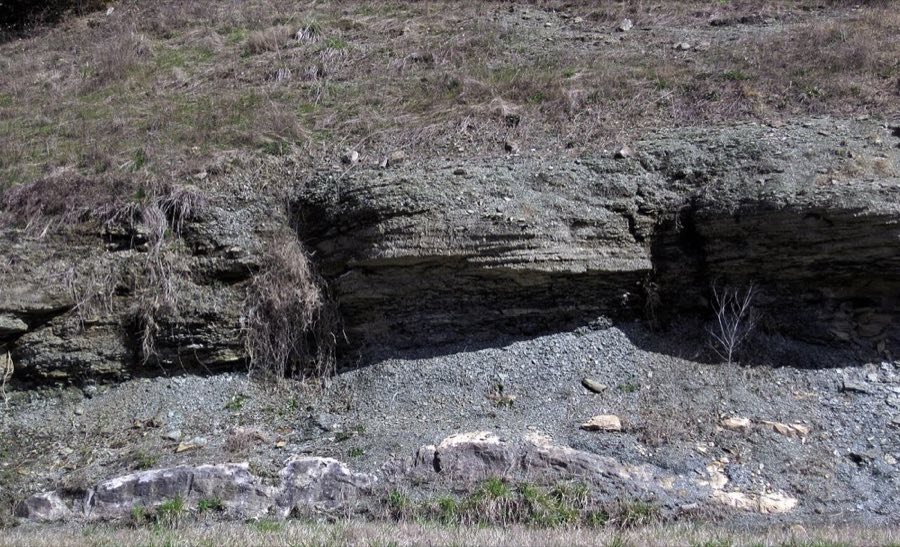
The Fort Payne Formation of Tennessee, Kentucky and Alabama is the Lower Mississippian cherty limestone whose crinoid mounds produce complete crowns of Agaricocrinus, Actinocrinites and Platycrinites, plus blastoids, the screw-shaped bryozoan Archimedes and Spirifer brachiopods. It is one of the two great crinoid sources of the US Midcontinent alongside the Burlington–Keokuk beds of Iowa and Missouri. Complete crowns with stems are valuable; check that the crown and stem belong together and that arms have not been sculpted.
| Country | United States |
|---|---|
| Region | Tennessee, Alabama, Kentucky, Georgia |
| Age | Tournaisian, Mississippian |
| Age range | ~352–340 Ma |
| Macrostrat rank | Fm· Macrostrat |
| Macrostrat age | 353–341 Ma· Macrostrat |
| Lithology | chert, limestone, carbonate, siltstone, dolomite, silt· Macrostrat |
| Environment | inferred marine, marine· Macrostrat |
| Macrostrat columns | 8 column(s) sampled from 8 unit(s)· Macrostrat |
| PBDB collections | 85 collections, 1112 occurrences· Paleobiology Database |
Collecting and legality
Fort Payne crinoid beds along Lake Cumberland and the Tennessee River valley are on Corps of Engineers, TVA and private land; Corps lakeshore collecting of common invertebrates is generally tolerated for personal use but not for sale, and Tennessee state law reserves fossils on state land. Crinoid crowns in trade come from private quarries and old collections.
Lithology and setting
Cherty limestone, calcareous shale and crinoidal packstone mounds of a Mississippian carbonate ramp.
Commonly recorded taxa (PBDB)
Genera most often recorded from this unit in the Paleobiology Database (first 200 occurrences): Agaricocrinus (26), Bryozoa (11), Cladochonus (7), Australosutura (6), Cleiothyridina (6), Cypricardinia (6), Dielasma (6), Fenestella (6), Fenestrata (6), Hustedia (6), Ostracoda (6), Porifera (6), Punctospirifer (6), Quadratia (6), Rugosochonetes (6).
Source: Paleobiology Database
Elsewhere
- Macrostrat: 685
- macrostratConcept: 1703
- PBDB: strata:Fort Payne
- Wikidata: Q5471799
- Macrostrat stratigraphic name
- PBDB occurrences for this unit
- Wikipedia: Fort Payne Formation
- Mindat: Fort Payne Formation
Cite this article
Stratum Study. "Fort Payne Formation" (Formation). Stratum Study pack 2026.09, as of 2026-09-19. https://stratum.black/study/formations/fort-payne-formation. Accessed 2026-09-20.
@misc{stratum-fort-payne-formation,
  title        = {Fort Payne Formation},
  author       = {{Stratum Study}},
  howpublished = {\url{https://stratum.black/study/formations/fort-payne-formation}},
  year         = {2026},
  note         = {Formation article, Stratum Study pack 2026.09, as of 2026-09-19; sources: stratum, macrostrat, pbdb, wikidata, commons. Accessed 2026-09-20.}
}
Citations carry the pack version and the article's as-of date so they resolve to the same text later. The facts themselves belong to the sources listed below; cite those for the science.