
Bivalve
Ostrea
Oyster
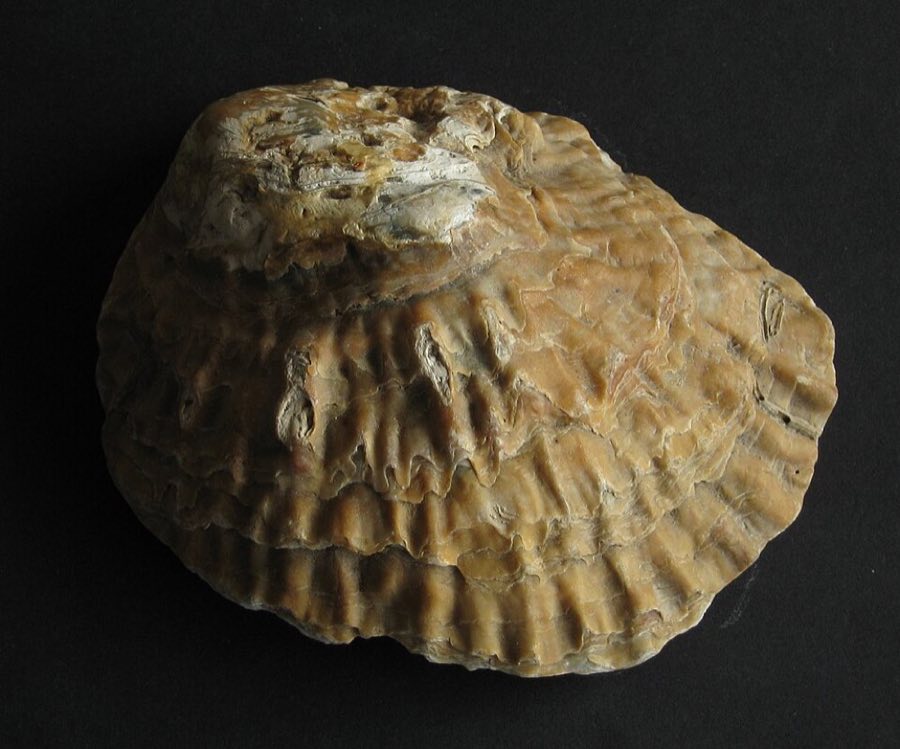
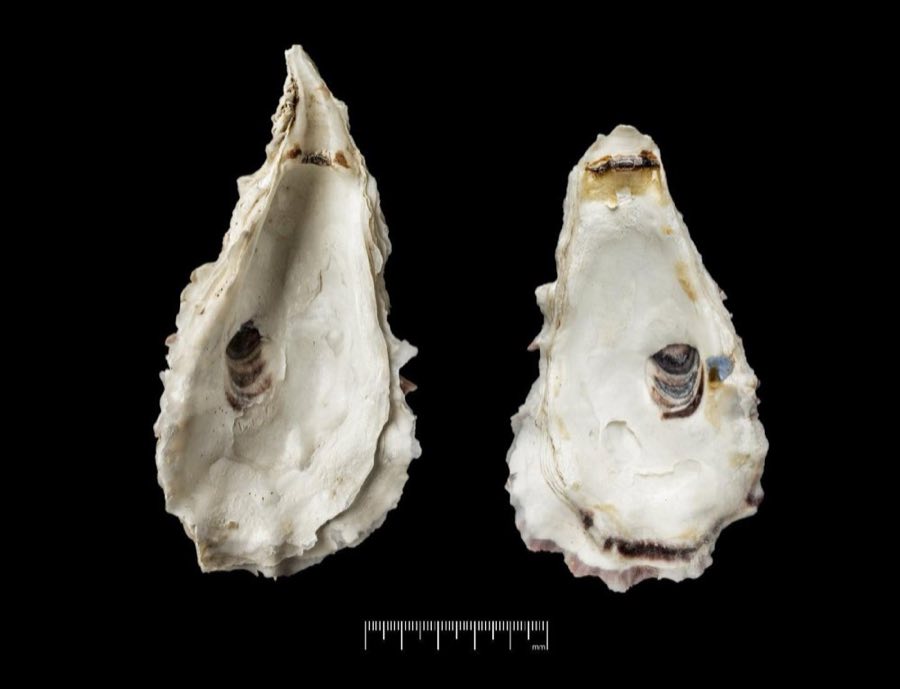
Ostrea is the true oyster, present from the Jurassic to today; fossil oysters are among the most abundant and least valued of all fossils, found in Cenozoic beds worldwide. Large Miocene–Pliocene oysters from the Yorktown Formation and Florida shell pits are collected as curiosities and for shell-collection completeness. Fossil oyster shell is calcite and stable, unlike aragonitic snails.
| Phylum | Mollusca |
|---|---|
| Class | Bivalvia |
| Order | Ostreida |
| Family | Ostreidae |
| Group | Bivalve |
| Rank (PBDB) | genus· Paleobiology Database |
| Author | Linnaeus 1758· Paleobiology Database |
| Classification (PBDB) | Mollusca › Bivalvia › Ostreida › Ostreidae· Paleobiology Database |
| Range (PBDB) | 260–0 Ma· Paleobiology Database |
| PBDB occurrences | 2917· Paleobiology Database |
| Authority (WoRMS) | Linnaeus, 1758· WoRMS / MolluscaBase |
| Status (WoRMS) | accepted· WoRMS / MolluscaBase |
| Extinct (WoRMS) | no· WoRMS / MolluscaBase |
| Classification (WoRMS) | Animalia › Mollusca › Bivalvia › Ostreida › Ostreidae· WoRMS / MolluscaBase |
Photographs
Elsewhere
- WoRMS AphiaID: 138298
- GBIF: 2286059
- PBDB: 16870
- Wikidata: Q1996210
- PBDB taxon page
- WoRMS / MolluscaBase record
- Wikipedia: Ostrea
- PBDB search: Ostrea
Cite this article
Stratum Study. "Ostrea" (Taxon). Stratum Study pack 2026.09, as of 2026-09-19. https://stratum.black/study/taxa/ostrea. Accessed 2026-09-20.
@misc{stratum-ostrea,
  title        = {Ostrea},
  author       = {{Stratum Study}},
  howpublished = {\url{https://stratum.black/study/taxa/ostrea}},
  year         = {2026},
  note         = {Taxon article, Stratum Study pack 2026.09, as of 2026-09-19; sources: stratum, pbdb, worms, wikidata, commons, nhm. Accessed 2026-09-20.}
}
Citations carry the pack version and the article's as-of date so they resolve to the same text later. The facts themselves belong to the sources listed below; cite those for the science.